Taylor Robinson
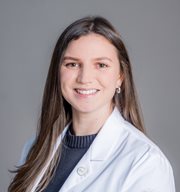
Taylor is a second-year medical student at The Warren Alpert Medical School of Brown University in Rhode Island. She is pursuing an MD and Masters of Science through the Primary Care-Population Medicine (PC-PM) program. The thesis for her Master’s program focuses on understanding the impact of hepatic fibrosis progression on inflammation and nutritional status in people living with schistosomiasis in the Philippines. Prior to medical school, Taylor attended Emory University in Atlanta, where she studied Anthropology & Human Biology, with a minor in Global Health. This sparked her interest in incorporating cultural understanding and local context to help improve health outcomes for vulnerable communities. Following college, Taylor spent three years conducting social and behavioral research at the National Human Genome Research Institute within the National Institutes of Health. There, she focused on addressing how social networks can be leveraged to improve health outcomes for caregivers and families. In medical school, Taylor co-leads a program teaching health education to middle schoolers in Providence, Rhode Island; serves as a scribe for the Brown Human Rights Asylum Clinic, which provides medical affidavits for people seeking asylum in the United States; and testifies for health legislation in Rhode Island. Additionally, she is a member of the global health interest group, the student-run free clinic, and a peer-mentoring program. Outside of school, Taylor enjoys spending her time exploring nature in New England, crocheting hats for friends and leading a book club with her classmates.
 The Impact of Hepatic Fibrosis Progression on Inflammation and Nutritional Status of Adolescents and Adults Living with Schistosoma japonicum infection
Research Institute for Tropical Medici, Leyte
The Philippines
What does the Kean Fellowship mean to you?
I am incredibly honored to receive the Kean Travel Fellowship in Tropical Medicine and to be supported by ASTMH. Throughout college I worked with a community-led rural clinic in Honduras and was fascinated by the interplay between health and culture in individual and community well-being. This experience, alongside my passion for research, has led me to ground my medical education and career in global health. Being awarded the Kean Fellowship has allowed me to expand upon these interests by traveling to the Philippines and contributing to the long-standing partnership between Brown and the Research Institute for Tropical Medicine in the Philippines. The fellowship has allowed me to conduct tropical medicine research in a way that is collaborative in its collective goal to better understand and address the burden of schistosomiasis on communities in the Philippines. I am deeply grateful for the opportunity to witness the day-to-day realities of conducting tropical medicine research firsthand and participate in work that aims to create more equitable health outcomes globally.
What do you anticipate learning?
In the Philippines, recent studies suggest that more than 12 million people live in areas endemic to schistosomiasis. Schistosomiasis is a significant contributor to morbidity and often leads to hepatic fibrosis, anemia and undernutrition across age groups. Despite this, schistosomiasis remains a neglected tropical disease that receives a disproportionately low amount of attention from the global community. This disparity between prevalence and resource allocation has driven my interest in researching the factors that lead schistosomiasis to cause hepatic fibrosis, a marker of morbidity and mortality among these communities.
Given the complexity of schistosomiasis prevalence, I also hope to better understand how various factors such as sex and co-infection influence cases of schistomiasis-related morbidity such as fibrosis. I am incredibly grateful to learn from and work alongside the local community health workers and team of researchers and medical technicians from the Research Institute for Tropical Medicine who are tireless in their long-standing pursuit to eradicate schistosomiasis. By traveling to the Philippines, I am eager to participate in the intricacies of global health work, experience a new culture and see how bi-directional partnerships can contribute to the overall goal of eliminating the burden of tropical diseases.
What interests you about tropical medicine and what problems are you interested in solving?
I am motivated to study tropical medicine, and specifically neglected tropical diseases, due to the disproportionate burden they can place on low- and middle-income countries globally. One problem I strive to address through my work is the inequitable impact of these diseases on women’s health, an area with persistent disparities in both morbidity and mortality. The landscape of global health is evolving rapidly and I believe it is more important now than ever to remain engaged in the social, economic and political contexts that directly shape access to care. I hope my research through the Kean Fellowship will serve as the foundation for a career combining medicine, research and advocacy to drive meaningful change for individuals and communities impacted by tropical diseases.