Rachel George
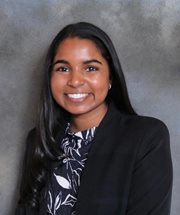
Rachel is a second-year student at the University of North Carolina at Chapel Hill School of Medicine. She graduated from Cornell University with a degree in Biomedical Engineering and spent two years at the NIH conducting immunogenetics and vaccine research. Her interest in global health was sparked while observing clinical trials on cerebral malaria, where she witnessed the role of research in improving outcomes in resource-limited settings. Since then, she has been especially motivated to address health disparities and design intentional, sustainable solutions to preventable disease. With her translational lab background, Rachel will travel to Bagamoyo, Tanzania to collaborate with UNC’s Infectious Disease Epidemiology and Ecology Lab and Muhimbili University of Health and Allied Sciences. Her project will focus on detecting asymptomatic low-density malaria infections through active case detection campaigns in Zanzibar. Looking forward, Rachel is passionate about building a career that integrates clinical practice, research and global health. She envisions working at the intersection of these fields to expand access to care and contribute to the reduction of inequities that perpetuate preventable illness. By combining her engineering background, research experience and medical training, she aspires to develop innovative approaches that bridge gaps in equity and improve health outcomes worldwide.

Active PCR Case Detection for Malaria Using Leftover Rapid Diagnostic Tests to Support Outbreak Investigation in Zanzibar
Zanzibar, Tanzania
What does the Kean Fellowship mean to you?The Kean Fellowship represents the ability to grow as a global health scholar by engaging directly in cross-cultural collaboration. To me, it means stepping beyond the classroom to learn from mentors and colleagues in another country, where diverse perspectives shape how research and care are approached. This experience will deepen my understanding of global healthcare systems and strengthen my ability to work as a culturally competent researcher and future practitioner.
What do you anticipate learning?
The research experience in Zanzibar and Bagamoyo offers an invaluable opportunity to study malaria in a global context, particularly within resource-limited settings where the burden of disease is greatest. Conducting research during June and July, directly after the rainy season, will allow me to observe malaria transmission at a time when stagnant water creates surges in mosquito populations. Studying the disease during this critical period will provide unique insight into the factors driving transmission, the identification of hotspots and the strategies that can inform malaria control and elimination efforts.
I anticipate learning how to connect data collection and analysis with real-world interventions that strengthen malaria surveillance and outbreak response in Tanzania. Just as importantly, I hope to deepen my understanding of how research findings are applied to public health practice, bridging the gap between scientific discovery and community-level impact.
Beyond the research, I look forward to learning about the clinical aspects of malaria, including its presentation, diagnosis and management in Zanzibar. This hands-on exposure will expand my appreciation for the complexities of delivering healthcare in diverse systems. Ultimately, I expect this experience to shape how I approach global health challenges, combining scientific rigor with cultural humility.
What interests you about tropical medicine and what problems are you interested in solving?
Tropical medicine excites me because it sits at the intersection of science, medicine and public health, focusing on diseases that have profound impacts on vulnerable populations. Despite decades of control efforts, malaria continues to pose enormous challenges, and contributing to solutions in this area is a driving motivation for me.
I am particularly interested in understanding the barriers that complicate malaria elimination, from the ecological conditions that fuel transmission, to gaps in diagnostics, treatment and prevention in resource-limited settings. Tropical medicine provides a framework to study these complex dynamics while also considering broader social and economic factors.
I am also drawn to the field’s emphasis on neglected tropical diseases more broadly, which often receive less attention but significantly impact public health. The problems I hope to help solve involve strengthening disease surveillance, improving outbreak response and developing strategies that are both scientifically sound and locally sustainable. Ultimately, I see tropical medicine as a platform to combine research, clinical practice,and collaboration to achieve meaningful, lasting improvements in global health.