Ishaan Desai
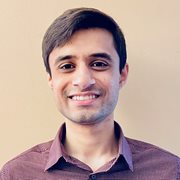
Ishaan is a medical student at Harvard University. He completed his bachelor’s degree at Harvard College and was active in infectious disease research, global health education, community health initiatives in Boston, and student activism for health justice. As he neared graduation, he worked with Dr. Paul Farmer and his team on the launch of the University of Global Health Equity, a novel health sciences university in rural Rwanda that seeks to train the next generation of global health leaders. He then joined Partners In Health and its affiliated academic department at Harvard Medical School to work as Dr. Farmer’s research assistant and to support his teaching, service, advocacy and partnerships. In his free time, Ishaan enjoys long walks and hikes with his golden retriever, Nala.

Biosocial Approaches to the Treatment of Multidrug-Resistant Tuberculosis in Sierra Leone
Partners In Health (PIH) and the Ministry of Health and Sanitation (MoHS)
Sierra Leone
What does the Kean Fellowship mean to you?
It is a great privilege to receive the Benjamin H. Kean Travel Fellowship in Tropical Medicine. The Kean Fellowship enables me and other students to pair our medical education with meaningful international experiences in clinical care, research, advocacy and community engagement. In so doing, it will strengthen our capacity to attend not only to individual patients, but also to the systems tasked with caring for them and to the broader forces that pattern the uneven distribution of tropical infectious diseases. I am also deeply grateful to the Kean Fellowship for welcoming us into the ASTMH’s vibrant and remarkably diverse community of practitioners, researchers and professionals. It’s a gift to learn from people of markedly different experiences and walks of life than my own, and to see my perspectives enriched by theirs.
What do you anticipate learning?
In 2017, Sierra Leone’s national health authorities, with accompaniment from Partners In Health and other partners, established the country’s first referral center for the treatment of drug-resistant tuberculosis; the program has since enrolled over a thousand patients and achieved treatment success rates well above the global average. Globally, recent years have also seen major scientific advances in the clinical management of drug-resistant tuberculosis. Since late 2022, for example, the World Health Organization has recommended multiple new, all-oral, shortened regimens for multidrug- or rifampin-resistant tuberculosis (MDR/RR-TB). If coupled with equitable platforms for their delivery, these innovations have the potential to substantially improve patient outcomes and reduce the complexity, toxicity, duration and socioeconomic burdens associated with treating MDR/RR-TB in Sierra Leone, among other impoverished settings.
Through direct immersion in Partners In Health’s clinical tuberculosis program, I will learn about the promises, challenges and nuances of delivering high-quality care for drug-resistant disease in a country with substantial overlapping burdens of poverty and tuberculosis. Given the unique intersection between recent clinical breakthroughs and renewed national commitments against tuberculosis, I also anticipate learning how novel drug regimens, diagnostic strategies, psychosocial services and community-based interventions are shaping clinical outcomes for MDR/RR-TB. In the process, I hope to gain an appreciation of the biosocial factors that enable and constrain the delivery of high-quality tuberculosis services, as well as the experiences of patients, clinicians and administrators in the implementation of changes to national treatment policy.
What interests you about tropical medicine and what problems are you interested in solving?
My interest in tropical medicine is driven by a desire to lessen suffering caused by infectious diseases of poverty—and by a commitment to a world in which everyone everywhere enjoys the right to good health. I hope to work alongside local colleagues, government health authorities and international partners to improve the quality of services afforded to patients with infectious diseases, and to expand community-based models for the treatment of tuberculosis, HIV, viral hepatitis and other chronic infections. Relatedly, I have a strong interest in social responses to epidemics. As Dr. Paul Farmer described in his insightful book, Fevers, Feuds, and Diamonds: Ebola and the Ravages of History, international responses to epidemics in impoverished settings have long been rooted in a paradigm of “control over care,” whereby the prevention of new infections is prioritized over improving survival among those already infected. I’m eager to help reimagine regnant paradigms of disease control by advocating for the integration of robust clinical services into outbreak responses and the linkage of said responses to long-term efforts to strengthen health systems.