Fatima Elzamzami
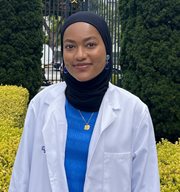
Fatima Elzamzami is a second-year medical student at the University of California, San Francisco School of Medicine. She graduated from Johns Hopkins University in Maryland in 2023 with a degree in Molecular and Cellular Biology, and then worked as a post-baccalaureate research fellow at the National Institutes of Health. Fatima’s academic interests center on global health and infectious diseases, particularly the ways in which structural inequities and displacement shape health outcomes. Under the mentorship of Dr. Melissa Conrad, Dr. Phillip Rosenthal and Dr. Stephen Tukwasibwe, Fatima spent two months in Uganda conducting a study comparing severe malaria risk in South Sudanese and Sudanese refugees. In her free time, Fatima enjoys baking, hiking and trying new cafés.

Severe Malaria Risk in Sudanese vs. South Sudanese Refugees in Uganda
Panyadoli Health Centre III
Bweyale, Uganda
What does the Kean Fellowship mean to you?
The Kean Fellowship provided me with the opportunity to gain hands-on experience in global health research early in my medical career. It provides an opportunity to explore my interests in infectious diseases and health equity while connecting me to a community of mentors and peers with shared goals.
What do you anticipate learning?
I anticipate learning how to design and implement field research in resource-limited settings and how to translate study findings into practical interventions for vulnerable populations. I also hope to gain a deeper understanding of the health challenges faced by refugee populations and broaden my knowledge on clinical manifestations, prevention and treatment of malaria.
What interests you about tropical medicine and what problems are you interested in solving?
I am drawn to tropical medicine because it lies at the intersection of infectious disease, global health and health equity. I am particularly interested in addressing barriers to prevention, diagnosis and treatment in vulnerable populations, including refugees and communities with limited health system access, and in working toward solutions that reduce inequities in care.