Sophia Kics
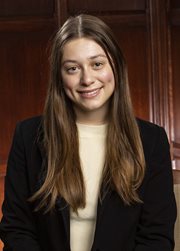
Sophia is a second-year medical student at the University of Illinois College of Medicine - Chicago. She received her BA in Spanish from the University of Notre Dame in Indiana in 2022. Before attending medical school, she completed a Fulbright grant as an English Teaching Assistant in Mexico. She is passionate about global health, reproductive rights advocacy and language justice in medicine, and she is grateful to have been able to continue learning about these things through the Ben Kean Fellowship. At UICOM, she is a leader of the Medical Students for Choice and Medical Students for Women's Health groups, and she volunteers at a local clinic. In her free time, she enjoys reading, playing tennis and spending time with friends and family.

Comparison of VIA and Pap Smear Results at a Clinic in Jalapa, Guatemala
Cooperativa El Recuerdo
Guatemala
What does the Kean Fellowship mean to you?
I am incredibly grateful to have received the Kean Fellowship, for it allowed me to spend my summer contributing to a project in Jalapa, Guatemala. I expanded my understandings of global medicine and healthcare systems, as well as the intersections of culture, language and health. It also allowed me to improve my medical Spanish and form connections that I hope to continue to foster in the future.
What do you anticipate learning?
In Jalapa, I assisted on a project to evaluate and expand cervical cancer screening in rural areas of the southeast region of the country. In lower resource settings, a cervical cancer screening method called Visualization with Acetic Acid (VIA) is often used instead of pap smears. VIAs are cheaper and quicker than pap smears, but often not as accurate. This project aimed to compare VIA and pap smear results among patients in Jalapa, as well as identify risk factors associated with abnormal results. Ideally, this will highlight the importance of providing accurate cervical cancer screening to all patients, but especially those in lower resource settings without access to care for potential complications of abnormal results.
What interests you about tropical medicine and what problems are you interested in solving?
I am interested in tropical medicine because of my passion for health equity. I believe that learning about global health and the role of medicine in other languages and cultures allows us to provide better care not only to patients in a global health settings, but also of diverse backgrounds in the U.S. I aspire to work within the space in my career and, in particular, with women's and reproductive health.