Arthi Vaidyanathan
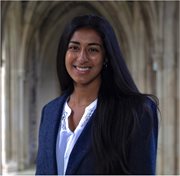
Arthi studied Biology and Global Health at Duke, where she grew interested in how well-designed systems can improve outcomes more than any new test or treatment. After graduation, she spent a gap year at the Weill Cornell Medicine Center for Global Health, where she supported study operations, data cleaning, and the behind-the-scenes logistics for a number of NIH-funded studies based in India and Uganda. She is currently a third-year medical student, which is a research year at Duke. For this year, Arthi is based in Moshi, Tanzania, working within the KCMC–Duke collaboration on an eye screening study in people with HIV. Day to day, she supports vision screening during routine HIV visits, coordinates handheld fundus imaging, and follows up on referrals. Long-term, she hopes to become an ophthalmologist working toward addressing the growing burden of global blindness through sustainable interventions and strong partnerships.

Eye disease in the new HIV era: A mixed methods study assessing prevalence, burden, and barriers to care in Moshi, Tanzania
Kilimanjaro Christian Medical Centre (KCMC)
Moshi, Tanzania
What does the Kean Fellowship mean to you?
The Kean Fellowship represents an opportunity to learn in the setting where I hope to build my career: resource-limited eye care. This fellowship allows me to take responsibility and manage the details for my own focused project. It also provides structure to develop skills I value—adapting interventions to their setting and using both quantitative and qualitative data to enhance data analysis.
Equally important, being a Kean Fellow means having the opportunity to be present in the setting where this work happens—not observing from behind a screen, but engaging directly in the clinics and communities that shape the research. It allows me to see firsthand the challenges and opportunities of implementation, to learn from colleagues on the ground, and to better understand the lived realities that numbers alone cannot capture.
The fellowship is also a community. To me, being part of the Kean network means having peers who share a commitment to global health and who are generous with their experiences. I am excited not only to learn from them now, but to carry those relationships forward, reaching out for guidance, collaboration and inspiration as I continue my training.
What do you anticipate learning?
One of the most valuable aspects of this fellowship is the chance to learn what it takes to run a study from the ground up. I anticipate building practical research skills—developing and refining SOPs, training and supporting study staff, putting quality checks in place, and making sure data collection is consistent and useful. These are the kinds of details that determine whether a study actually works in practice, and I am excited to learn how to manage them with care and accountability.
At the same time, I know that some of the most powerful learning will come not from doing, but from observing. The Duke–KCMC partnership is one of Duke’s strongest global health collaborations, and I want to pay attention to how relationships are built and sustained across institutions. I hope to notice what makes projects easier or harder to implement, and what is required to keep momentum over time. Just as important, I want to listen for the differences between what the community values and what researchers might value.
I also expect to learn how to adapt. No matter how well a protocol is designed, things rarely go as planned in the field. Learning how to respond thoughtfully to unexpected challenges, while keeping the project grounded in respect for both patients and staff, will be an important part of my growth. Finally, I see this fellowship as a chance to reflect on what global health means to me personally. I want to observe carefully, contribute responsibly, and use this experience to clarify how I want to engage with global health in the future.
What interests you about tropical medicine and what problems are you interested in solving?
Tropical medicine appeals to me because it sits at the intersection of biology, systems and daily life. In ophthalmology, much vision loss is preventable or treatable, yet in many low-resource settings patients still lack timely access to screening, diagnosis and care. As infectious causes of blindness have declined, chronic eye diseases have emerged. These conditions require not only clinical expertise, but also strong systems of prevention, referral and follow-up.
The problems I hope to work on are simple to describe but difficult to solve: late detection, fragmented handoffs, financial and transportation barriers, and stigma. I am particularly interested in how we can integrate eye care into existing health platforms—whether HIV clinics, primary care centers or community outreach—so that screening and referral become part of routine care rather than an added burden.
I have also learned that technical solutions alone rarely succeed without attention to context. Listening early changes design. I want to learn how to create workflows with the people who do the work, adapt tools so they fit the setting, and remain flexible when challenges arise. I hope to apply these lessons across a range of tropical eye problems. My goal is to help design and evaluate practical strategies for care delivery in tropical settings, always with the broader aim of strengthening health systems and making vision care more accessible for patients who need it most.