Aleksandra Bajer
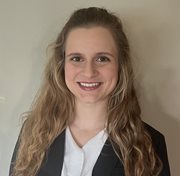
Aleksandra is a current fourth-year medical student at the University of Minnesota Medical School. She has a bachelor's degree in Genetics, Cell Biology and Development from the University of Minnesota. As an undergraduate student, Aleksandra developed an interest in molecular biology and soil bacteria. She continues to explore this passion and is particularly interested in identifying molecular markers of morbidity and mortality in infectious disease to aid in predicting health outcomes. Her future research interests include investigating the impacts of climate change on the prevalence of various infectious diseases, particularly in resource-limited settings. Beyond research, Aleksandra is committed to serving under-resourced communities. As both a previous volunteer and board member, she assisted in advancing primary care with The Phillips Neighborhood Clinic, a student-run free clinic in Minneapolis. As an aspiring internal medicine physician, Aleksandra strives to aid in pandemic response networks at the local and global levels. In her free time, Aleksandra enjoys swimming, baking and spending time with her cat, Beenie.
 Optimization of Cerebrospinal Fluid Collection and Processing for Preservation of the CSF Metabolome to Predict Clinical Outcomes in Adults with HIV-associated Cryptococcal Meningitis
Mulago National Referral Hospital
Uganda
What does the Kean Fellowship mean to you?
The opportunity to learn from infectious disease specialists and participate in research on cryptococcal meningitis is invaluable experience for shaping a future career in global health and internal medicine. The ability to spend four weeks in Kampala would not have been possible without support from the Kean Fellowship. I am honored to receive this award and contribute to the longstanding partnership between the University of Minnesota and Makerere University.
What do you anticipate learning?
For my Kean project, I will be involved in optimizing the process of CSF collection and storage to maintain the integrity of the CSF metabolome to facilitate analysis of various biomarkers found in patients who have HIV-associated cryptococcal meningitis. Additionally, I hope to gain insight into medical practices outside of the United States all while immersing myself in Ugandan culture. I am excited to learn from Ugandan physicians and deepen my understanding of HIV and cryptococcal meningitis, including their medical and social impacts.
What interests you about tropical medicine and what problems are you interested in solving?
As the daughter of a microbiologist and a conservation biologist, I grew up learning about how microbes shape our lives and the importance of ecology in the spread of infectious diseases. As a future physician, I am fascinated by the intersection of ecology and infectious disease, especially in the context of zoonotic diseases. I look forward to understanding the influence of various social, geographic and meteorologic conditions on the emergence and spread of these infectious diseases. I hope to use this knowledge in my future practice to help predict infectious disease outbreaks and coordinate response networks to lessen the morbidity and mortality of tropical infectious diseases.