Cameron O'Connell
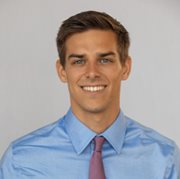
Cameron is a second-year medical student at University of Connecticut School of Medicine in Farmington. He graduated from the University of Oregon with a BSc in General Science in 2020, which allowed him to study Biology and Human Physiology. During his studies, he conducted research in an environmental physiology lab exploring adaptations to heat stress. He followed this with a year working as a youth mental health counselor in Eugene, Oregon. Before applying to medical school, he was inspired by global health leader Paul Farmer’s ambitious work in resource-limited settings, hoping one day to develop and apply his own medical skills in these settings. Thanks to support from the Benjamin H. Kean Travel Fellowship, he was able to investigate the challenges to treatment adherence for rheumatic heart disease patients in Gulu, Uganda.
His clinical interests lie in understanding the social and biological factors underlying disease processes and using a biopsychosocial approach to reduce disease burden in underserved populations. He hopes to supplement his future work in the U.S. with trips to resource-limited settings.

Rheumatic Heart Disease in Uganda: Assessing Penicillin Treatment Challenges
Gulu Regional Referral Hospital
Gulu, Uganda
What does the Kean Fellowship mean to you?
The Kean Fellowship offers an unparalleled exploration into tropical medicine for early investigators. The support from ASTMH makes it possible to initiate quality overseas research into an area of interest while still developing fundamental research skills. For me, this meant I could work with my home institution to find a project that matched my interests and pushed forward on existing research questions. Thanks to the additional support from the Kean Fellowship, I was able to use to utilize a more robust design. It’s very empowering to know that my experience forged international connections that will benefit future students at my home and overseas institution thanks to this fellowship opportunity. Additionally, the fellowship formalizes an interest area of mine in a way that allows for large personal growth as a researcher and gives legitimacy to any future competitive grant applications.
What do you anticipate learning?
While living in Gulu, Uganda for nearly two months, I was able to work closely with local collaborators to investigate challenges with the treatment of rheumatic heart disease. This opportunity taught me to work largely independently in organizing the study operations, with easy access to higher level support when needed. Indeed, we had some initial challenges with an unexpected approval that required quick thinking and a professional response. Thankfully, my local supervisor, Dr. Felix Bongomin (Gulu University, Department of Infectious Disease and Microbiology), was very supportive and we navigated the challenges swiftly. Additionally, getting to work onsite at Gulu Regional Referral hospital was a humbling experience that showed me that high-quality care can be found in even the most resource-limited settings. I am grateful for developing international relationships with these healthcare professionals who are the backbone of such important programs and taught me so much about the human side of medicine.
What interests you about tropical medicine and what problems are you interested in solving?
Tropical medicine is a unique departure from my normal work, offering a look into the varying disease demographics across the globe. For example, the number one cause of death in Uganda is malaria, a tropical disease with rare cases in the U.S. that are 95% imported from recent travel. Thus, tropical medicine is an opportunity to step into a new world of medicine and learn local approaches to their diseases, fostering more creativity as we work with collaborators across the globe. Tropical medicine also emphasizes the role of social determinants of health. The disease I was studying is a post-infectious complication that is largely caused by poor access to care. In this sense, tropical medicine is no different from other epidemiology in that we must learn which biopsychosocial factors are leading the disease process to deploy targeted solutions. Seeking these changes in low-resource settings is a difficult challenge that requires creative solutions and is inherently people focused. In this way, tropical medicine allows me to stay grounded in the most important aspects of medical care. Thus, I am interested in topics like rheumatic heart disease or other neglected tropical diseases in which prevention can be bolstered with things like education and community health programs.